


Monday, 22 December 2025
Slip, slop, slap, and put a wrap on that sprinkler to save water this summer
Residents and visitors to Queenstown Lakes District are encouraged to do their part to help save water this summer.

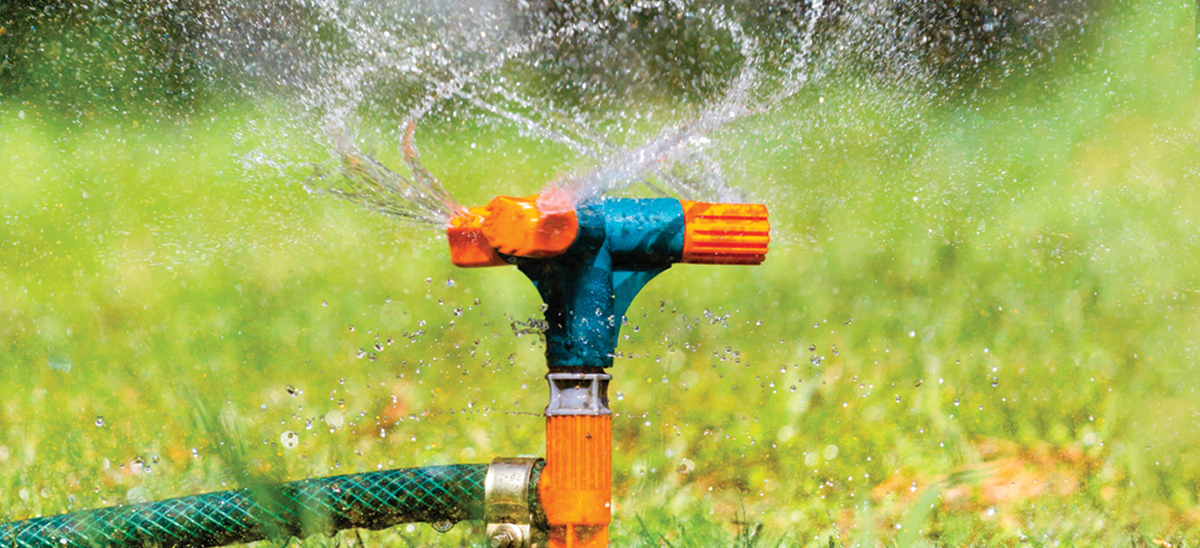
Residents and visitors to Queenstown Lakes District are encouraged to do their part to help save water this summer, using simple changes at home or the holiday house to safeguard water supplies during what is sure to be another long, hot, and dry summer.
Queenstown Lakes District Council (QLDC) Infrastructure Operations Manager, Simon Mason said demand for water across the network was already on the rise, despite a particularly wet spring and a few welcome days of rain to start the sunny season off.
“We historically see water usage skyrocket over the Christmas and New Year period, and as we move into 2026 and get more of those hotter, drier days we all enjoy, that sprinkler or hose at home is likely to be used a lot more to keep gardens green and lawns lush,” said Mr Mason.
“Water is a limited and precious resource, but how we’re using it can become unsustainable very quickly in summer, putting our supplies at risk in the event of an emergency and potentially leading to temporary water restrictions if the network comes under enough strain.”
To help achieve a summer free from water restriction, Mr Mason shared there were plenty of quick and easy things to do at home to help keep reservoirs filled, and water and summer flowing along nicely.
The biggest water saving efforts at home can be made when watering lawns or gardens, with residents encouraged to consider reducing their use of sprinklers or irrigation, and only watering late at night. This not only avoids the worst of the day’s heat and water being lost to evaporation, but also the busy morning and evening periods when water demand is at its highest.
Other effective tips include saving up to 20 litres for every minute cut from time spent in the shower, and the simple act of turning off the tap while brushing teeth or shaving to save another 10 litres in the space of a minute.
Another important step is to fix water leaks around the home and to notify Council of any on public land as soon as possible, helping to stop water that’s been treated, stored, and then piped across town ending up in the gutter and heading down a storm drain and straight back to the lake or river.
Mr Mason acknowledged little tweaks to water use at home might not seem like much, but collectively, enough people making one change would make a significant difference to the Queenstown Lakes District’s water supplies.
“We’re blessed with an abundant freshwater resource right in our backyards, but maintaining our water supplies will never be a case of just getting more from the lake aquifer. Taking that water and constructing and operating the infrastructure needed to treat it, store it, and deliver it to taps around the district comes with a significant cost,” said Mr Mason.
“We’ve all had or seen the sprinkler blasting at midday, or the broken irrigation that’s just spent three hours watering a nearby road or footpath. It’s not the water we’ve got, it’s how we’re using it,” said Mr Mason.
With water restrictions always a possibility as summer wears on and reservoir levels drop, signage has been erected in several locations throughout Queenstown Lakes District to detail the different water alert levels and what residents and visitors are expected to do if restrictions are required.
Residents and visitors can check out a range of tips and tricks to play their part and help save water at home at www.qldc.govt.nz/save-water.
More information on water restrictions and what the different water alert levels mean is available at www.qldc.govt.nz/water-restrictions.
ENDS | KUA MUTU.
Media contact:
TEL: 03 441 1802.
communications@qldc.govt.nz
FURTHER INFORMATION | Kā pāroko tāpiri
More information on how to save water this summer can be found at www.qldc.govt.nz/save-water.
Fast facts about common water users in the home:
- Flushing the toilet can use up to 6 litres of water
- Running the tap for one minute can use up to 10 litres of water
- A garden sprinkler can use up to 17 litres of water a minute
- A shower can use up to 20 litres of water a minute
- Running the dishwasher can use between 14 and 25 litres of water
- Running a bath can use up to 90 litres of water
- Using the washing machine can use between 50 and 135 litres of water
How do water restrictions work?
QLDC continuously monitors water production versus how much is being taken from reservoirs across the district. If a general trend is spotted where water is being used faster than it can be produced, treated, and stored, temporary restrictions may be put in place for people connected to Council’s potable water supply. Here’s how the different water alert levels work:
- Water alert level 0: No water restrictions, but please use water wisely at all times.
- Water alert level 1: Hand-held hosing kept to a minimum at any time. Sprinklers only from midnight to 6.00am.
- Water alert level 2: Hand-held hosing kept to a minimum at any time. No sprinklers at any time, and no contractor water takes.
- Water alert level 3: No use of outside water systems, no sprinklers or hand-held hoses at any time, and no contractor water takes.
More information on water restrictions is available at www.qldc.govt.nz/water-restrictions.