



Friday, 03 July 2026
Fire at Wānaka Transfer Station prompts reminder about safe battery disposal
Correct battery disposal helps protect people, infrastructure and the wider community by reducing the risk of fires throughout the waste and recycling system.

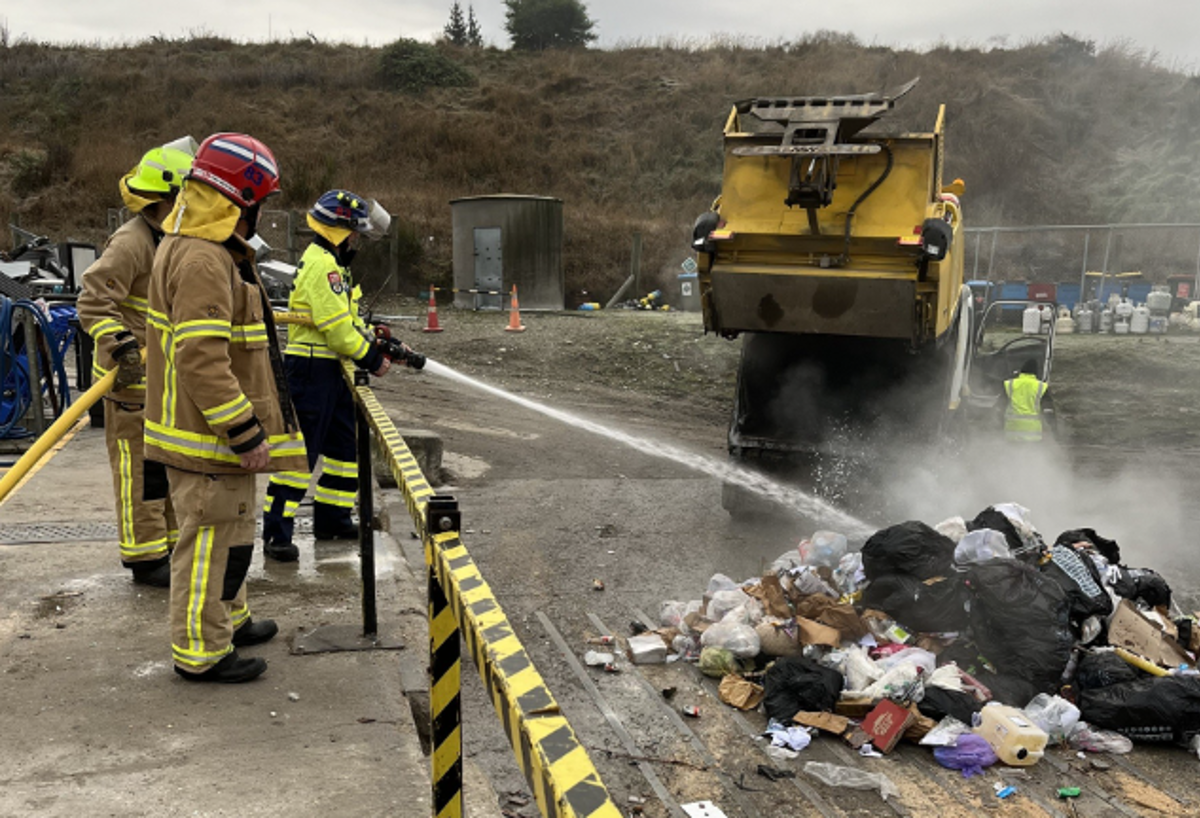
A fire at the Wānaka Transfer Station last week has prompted a reminder to residents and businesses about the importance of disposing of batteries safely.
At approximately 9.30am on Wednesday 24 June, staff at the Wānaka Transfer Station were alerted to smoke coming from a waste collection vehicle arriving on site.
Following established safety and emergency procedures, site personnel directed the vehicle to a designated unloading area to isolate the risk and safely contain the situation. Fire and Emergency New Zealand (FENZ) responded promptly and extinguished the fire.
Following inspection of the unloaded material, the suspected cause of the fire was identified as a single D-size battery and associated electronic waste within the load.
Operations at the transfer station were temporarily suspended for approximately 30 minutes while emergency services ensured the area was safe. Services have since resumed as normal, with no reported injuries or damage to equipment.
QLDC Infrastructure Operations Manager Simon Mason said the incident serves as an important reminder that batteries or electronic devices should never be placed in rubbish and recycling bins.
"Even a single battery can create a serious fire risk once it enters the waste system. We're grateful for the quick response from staff and Fire and Emergency New Zealand, and this incident highlights once again why it is so important that batteries are disposed of correctly.
"Whether it's a lithium battery, household AA, or a larger D-size battery, all batteries have the potential to ignite if they are damaged or crushed during collection and processing."
Batteries and electronic waste can be dropped off at the Wānaka Transfer Station and Frankton Transfer Station for safe recycling, or residents can use the WasteMINZ Online Battery Map to find their nearest battery collection point.
Correct battery disposal helps protect people, infrastructure and the wider community by reducing the risk of fires throughout the waste and recycling system.
ENDS | KUA MUTU
FURTHER INFORMATION | Kā pāroko tāpiri:
For more information on recycling and disposal options in the Queenstown Lakes District, check out our A-Z Rubbish & Recycling Directory.
Safe battery disposal options
Household and car batteries can be recycled free of charge at the Frankton and Wānaka transfer stations.
Accepted batteries include;
Lithium/ Li-ion batteries (e.g. from laptops, cameras, cell phones and tools);
Alkaline (AA, AAA, C, and D alkaline batteries);
9-volt (e.g. from smoke alarms),
Cr123 (e.g. from cameras);
Dry cell and zinc (e.g. button batteries);
NiCd, NiMH (e.g. rechargeable batteries),
Lead acid car batteries
NOTE: Damaged, leaking, rusty and modified batteries cannot be recycled. These can be brought to the transfer station to be disposed of as hazardous waste. Batteries that are damaged should be placed in a container to prevent spills.
Electric vehicles (EVs), solar panels, or other commercial sources batteries should be returned to the place of purchase or taken to a commercial battery recycler.
Bay Audiology clinics offer free hearing aid battery recycling.
Mitre10 recycles batteries from devices brought instore, including AA, AAA, C, D, 9V, 6V, power tool and button cell batteries. More information about their recycling program.
Bunnings in Queenstown also have a battery recycling program and accepts AA, AAA, C, D, 9V, 6V, power tool and button cell batteries. More information.
Use rechargeable batteries whenever possible to reduce waste, save energy, and over time, cost you less. Where disposable batteries have to be used, choose long-life brands.
Safety Tips:
Tape the end of batteries (terminals) with clear sticky tape to reduce fire risks. Used batteries can still have a residual charge that could cause a spark if the terminals come into contact with other batteries or other conductive materials like metal objects.
Store in a non-metallic container like a reused clean, clear glass jar or plastic jar/container at home until you’re ready to bring them to a drop off collection point for recycling. Keep batteries in a cool, dry place, away from heat sources like stoves.