
- Your Council
- Careers
- Climate Change and Biodiversity
- Consultations
-
Council Documents
- Annual Plans
- Annual Reports
- Archived Agendas & Minutes
- Asset Management Plans
- Awarded Council Contracts
- Bylaws
- Long Term Plan (LTP)
- Monthly Reports
- National Policy Statement - Urban Development 2020 (NPS-UD)
- Policies
- Pre-election reports
- Queenstown Lakes Spatial Plan
- Reserve Management Plans
- Section 10A Reports
- Small Community Plans
- Strategies and Publications
- QLDC's approach to advocacy 2026-2028
- Council Meetings
- Council Projects
- District Plan
- Elected Members
- Elections
- Fast-track Approvals Act
- LGOIMA (information) requests
- Media Centre
- News and Updates
- News
- Newsletter Archive
- Our Strategic Framework
- Public Notices
- Sister Cities
- User Fees and Charges
QLDC Advocacy
At QLDC, advocacy means representing the interests of our community and working with others to influence decisions, funding, policies, and legislation that affect the Queenstown Lakes District, helping to achieve better outcomes for our people, places and environment. By working together we can make a difference.
To do this well, we need a clear and coordinated approach to advocacy. Find out more in our QLDC Advocacy Approach 2026-2028.
WHAT IS ADVOCACY?
Advocacy is how Council represents the community and works with decision-makers to secure funding, influence policy, and achieve positive outcomes for the district. This involves raising important issues, promoting solutions, and working with government, agencies, and other organisations on matters that affect Queenstown Lakes.
Why do we advocate?
We advocate to ensure the needs and aspirations of the Queenstown Lakes community are reflected in decisions that affect our district. Effective advocacy helps secure better policies, stronger support, and improved long-term outcomes for our communities.
How do we advocate?
Council advocates by seizing opportunities to influence decisions. The best approach depends on the issue, who is involved and where it sits within the policy development cycle.
QLDC Triennial Advocacy Cycle
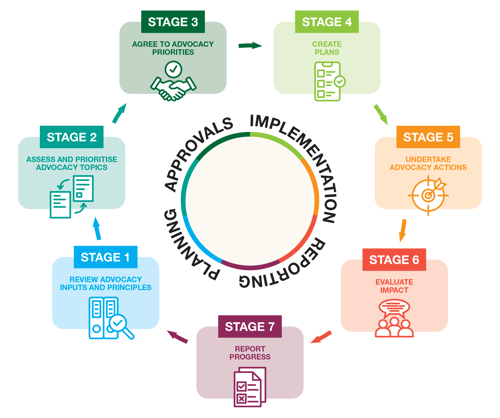
Council advocates in a range of ways, including:
Building strong relationships with Ministers and decision-makers through meetings, letters, and presentations.
Strategic engagement with Members of Parliament and others across government
Engaging with candidates during election periods.
Working proactively with central government officers.
Partnering with other councils, community organisations, and businesses where local expertise and partnerships can strengthen our voice.
Taking part in regional and sector groups.
Raising awareness through community campaigns.
Making and leveraging submissions on proposals and consultations.
Using media and communications to highlight key issues and priorities.
Strong relationships are key to successful advocacy.
It's important that as a Council we ensure our communities views and best interests are reflected in the developments of Central Government and other official bodies. So we regularly review proposals for change and new laws, and where appropriate, we will make a formal submission. You can find our submissions below.
Submissions by QLDC
Kā tāpaetanga nō QLDC
Submissions are formal feedback provided by Council to central government, agencies and other organisations on proposals that may impact the Queenstown Lakes District. They form an important part of Council's advocacy work on behalf of the community.
Due to the timeframes for consultation processes, submissions are typically endorsed retrospectively at the next Full Council meeting after the submission is due.
You can find out more about consultation processes run by central government, its ministries and agencies, and what consultation and submission opportunities are coming up, by visiting the New Zealand Government Consultation listings webpage. Another resource to check out is the list of business before Select Committees, the groups within the New Zealand Parliament that consider a wide range of topics that affect all New Zealanders. You can find that list on the Business Before Committees Parliament webpage.
Contact us
Can't find the documents that you're looking for? Then email us for help.